So, I've been working on launching this clock for about a year. Everything from designing the clock, choosing color schemes, materials for the clock, scripting and directing the video, searching for manufacturers, sourcing... everything that goes into taking a product from concept to placing it in the hands of the consumer.
It's been a ton of work and finally yesterday I launched the clock at noon with a funding goal of $10,000. Like anything you hope for the best but fear for the worst. The response to my clock and all of my hard work has exceeded my expectations. The funding period for the clock will be 30 days. In less than 24 hours I have raised 49% of the funding goal and have landed in the Staff Pick spot where the staff of Kickstarter chooses projects to feature.
At this rate the clock is projected to raise about $70,000 by the end of the funding period. I plan on getting it up on design blogs like Core77 and other sites like Reddit. Hopefully, with further publicity I'll make it well beyond that projection and raise a lot of money.
Below is a link to my Kickstarter page for the Muse Clock
Wednesday, October 16, 2013

Tuesday, October 1, 2013
Designer of Note
Marc Newson (www.marc-newson.com)


Born October 20th, 1963 (Sydney, Australia)
Based in London
Work includes, products, furniture, aircraft, interiors, jewelry, clothing


Characteristics of design: Smooth flowing lines, transparency, translucency, and an absence of sharp edges.
What I like about his design. Clean and concise. Use of bold color and color accents in design. Also like the range of his work. Inspiring.
Known for Lockheed Lounge Chair

More Examples of Work
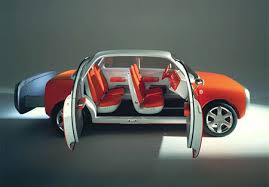


Born October 20th, 1963 (Sydney, Australia)
Based in London
Work includes, products, furniture, aircraft, interiors, jewelry, clothing
Characteristics of design: Smooth flowing lines, transparency, translucency, and an absence of sharp edges.
What I like about his design. Clean and concise. Use of bold color and color accents in design. Also like the range of his work. Inspiring.
Known for Lockheed Lounge Chair
More Examples of Work
Wednesday, June 12, 2013
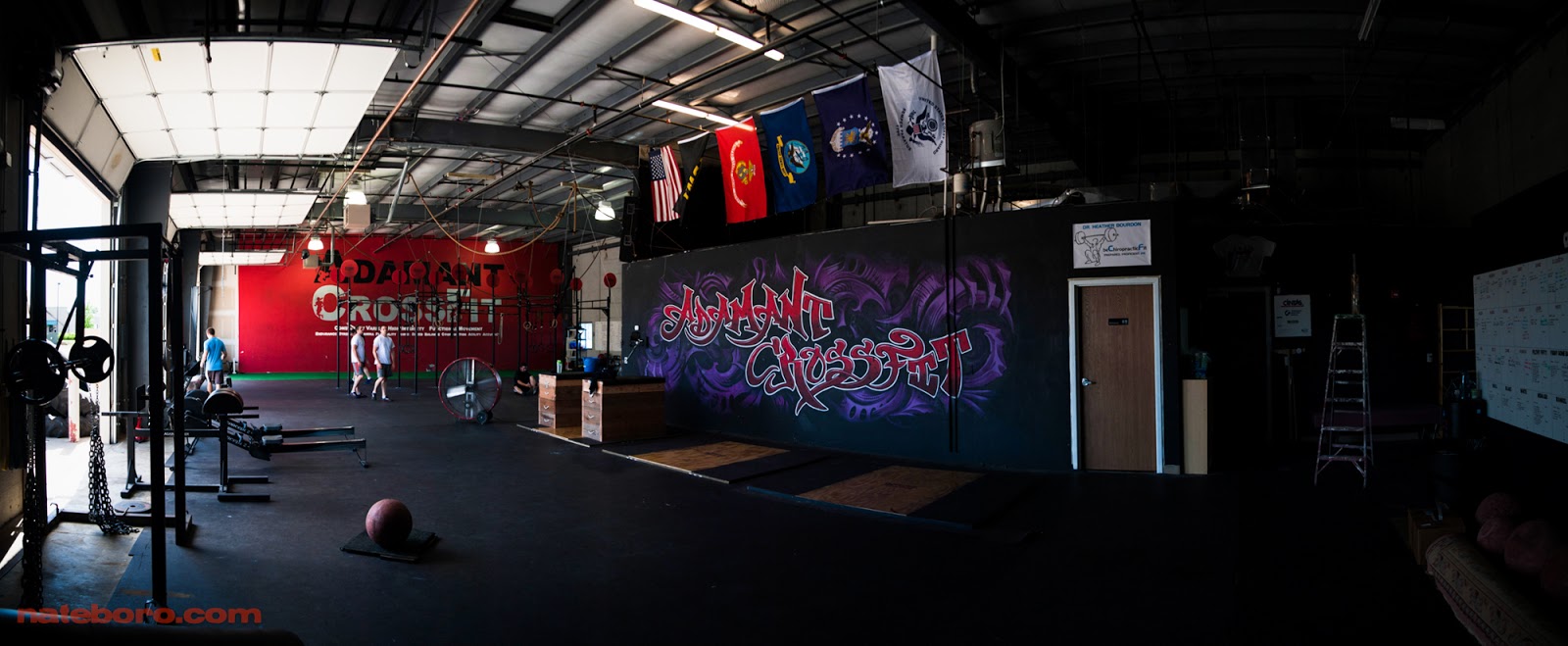
Photos: Adamant CrossFit
Yesterday I checked out Adamant Crossfit. I've been taking fitness photos for a few years and had yet to get anything pertaining to CrossFit. So I called up Adamant, and Jordan (the owner) was more than willing to let me cruise around the gym with my camera as he and others did the Workout of the Day. Pretty intense stuff! Here are a few images from the short time I was there. I'll definitely be back for more photos... and to accept the invite to join a W.O.D. Thanks for the hospitality Jordan.


Tuesday, November 27, 2012
Berry Plastics
This was a really cool tour. I think in part due to my choosing of my tour guide. I chose to go with the plastic engineer in hopes that he would divulge and be able to answer questions of a more technical manner. Again, I am amazed at production, and in this case the sheer volume of it. In just a matter of minutes, it goes from a tiny pebbled raw material into a useable designed container. Not just one, but thousands and even millions! It's absolutely crazy and at the same time disturbing that we as a society use that much plastic. Sure it provides jobs, but at what cost? I would be willing to wager that not even 50% of the plastic that leaves that place gets recycled.
Oh look! I'm drinking out of a thermoformed cup and there isn't even a recycle bin at this place of origin to throw it out. Just a common trash bin. What is the hold up with instilling a common mentality of taking care of the earth? It seems as there are a select few who really give a rip about what's going on and no matter how hard (we) they try, it won't change the big picture until a broader portion of the population gets involved.
So, Berry Plastics... a company that exists because we are a disposable/on-the-go/wasteful society. The people have the power to change "the machine" it's for each one of us that these cups are made, that the landfills are littered with trash that can be reused and not add to the abysmal landscape of our collective disregard for the volume of trash that we produce!
I just can't seem to get off this topic this post can I?
Alright, so Materials: Plastic, lots and lots and lots of plastic. Ink.
Processes: Injection Molding and Thermoforming
Oh look! I'm drinking out of a thermoformed cup and there isn't even a recycle bin at this place of origin to throw it out. Just a common trash bin. What is the hold up with instilling a common mentality of taking care of the earth? It seems as there are a select few who really give a rip about what's going on and no matter how hard (we) they try, it won't change the big picture until a broader portion of the population gets involved.
So, Berry Plastics... a company that exists because we are a disposable/on-the-go/wasteful society. The people have the power to change "the machine" it's for each one of us that these cups are made, that the landfills are littered with trash that can be reused and not add to the abysmal landscape of our collective disregard for the volume of trash that we produce!
I just can't seem to get off this topic this post can I?
Alright, so Materials: Plastic, lots and lots and lots of plastic. Ink.
Processes: Injection Molding and Thermoforming
Thursday, November 22, 2012
Manufactured Landscape
As a photographer I found this video very interesting. It's intimidating how many people are involved in some of his shots. I prefer to document what's going on and mostly stay out of the way. It was somewhat of a letdown to see that some of his shots were staged, such as the guy guiding the donkey. Even though, that scene probably plays out a hundred times each day, it was sad to see that he staged it and what we saw as a scene of toil was somewhat staged and the guy was paid to play himself. Can't exactly explain why it bugs me, but it just seems a little fabricated...
Concerning the magnitude of many of the projects, it was utterly mind blowing the scale of the dam and the number of people it was displacing. Added to that, the fact that they had to destroy their own towns with hammers and other human powered means. Similar to the way the Indonesians disassembled the gigantic cargo ships. They were driven as far up the beach as possible during high tide and then left to be gutted by men and boys with little or no safety equipment. Which is absolutely insane! OSHA would have a hay day!
From the point of design, it makes me question it all. Is all of the scarred landscape worth whatever raw material or structure is effecting the landscape? Is there a better way to do something to leave less of a footprint?
They are important questions that seem to come up time and again in discussions about responsible design.
Concerning the magnitude of many of the projects, it was utterly mind blowing the scale of the dam and the number of people it was displacing. Added to that, the fact that they had to destroy their own towns with hammers and other human powered means. Similar to the way the Indonesians disassembled the gigantic cargo ships. They were driven as far up the beach as possible during high tide and then left to be gutted by men and boys with little or no safety equipment. Which is absolutely insane! OSHA would have a hay day!
From the point of design, it makes me question it all. Is all of the scarred landscape worth whatever raw material or structure is effecting the landscape? Is there a better way to do something to leave less of a footprint?
They are important questions that seem to come up time and again in discussions about responsible design.
Thursday, November 15, 2012
El Dorado
El Dorado and DI were two of the places we toured that I would like to work at. The wide range of projects they take on would definitely keep things interesting. The city mockup of Wichita was really cool and it was interesting to find out that if they had their choice they would build one for every project they were working on.
The quality and volume of items that they can produce in their small shop is pretty incredible as well.
I was originally accepted into the Master's Program for Architecture at KU, but subsequently switched to Industrial Design for a number of reasons. However, I still have a draw to the field of architecture and working in a place like ElDo would be something that would keep me interested for sure.
Materials: Steel, concrete, brick, (all building construction materials), furniture materials, wood, acrylic.
Processes: drill press, various saws, welding, sanding, finishing.
The quality and volume of items that they can produce in their small shop is pretty incredible as well.
I was originally accepted into the Master's Program for Architecture at KU, but subsequently switched to Industrial Design for a number of reasons. However, I still have a draw to the field of architecture and working in a place like ElDo would be something that would keep me interested for sure.
Materials: Steel, concrete, brick, (all building construction materials), furniture materials, wood, acrylic.
Processes: drill press, various saws, welding, sanding, finishing.
Tuesday, November 13, 2012
Teething Toys
Materials:
Exterior - Food Grade Silicone
Liquid - Sterile water or gel
Process:
Exterior formed via injection molding. Two halves formed into one piece. Ring is then filled with liquid and sealed.


Exterior - Food Grade Silicone
Liquid - Sterile water or gel
Process:
Exterior formed via injection molding. Two halves formed into one piece. Ring is then filled with liquid and sealed.


Thursday, November 1, 2012
Huhtamaki
Huhtamaki was always one of my favorite places to get called to when I worked at Heubel Material Handling. My job was to diagnose and repair electrical, mechanical, and hydraulic problems with forklifts. So, I saw the operation from a completely different point of view, but was intrigued and would take extended breaks to walk through the production area and just watch everything that was going on.
Another amazingly clean environment for production. Granted paper isn't necessarily dirty, but if not kept in check, the whole place could get out of hand rather quickly considering all of the ancillary mechanical processes that are occuring in conjunction with production of the paper products. The food safe standards obviously have a big part to play in the cleanliness of the place.
It would have been cool to see the design process of a cup or a container and how all of the folds and rounded tops are taken into account.
Materials: Cardboard, glue, plastic, foam.
Processes: die cutting, printing, folding,
Thursday, October 25, 2012
Lawrence Paper Company
Lawrence Paper Company was a very interesting tour. It reminded me a lot of my time on the USS Georgia working in the engine room. The atmosphere was similar, very industrial and clean. They were both incredibly efficient at the tasks they set out to perform. It was amazing to see how quickly 3 huge rolls of paper were turned into corrugated boxing material. I was also surprised to find out how much the type of wood plays a part in the kind of ox it is most suitable for.
Materials: Paper, lots and lots of paper. Glue, ink.
Processes: Folding, Cutting, Gluing, CNC, recycling, printing,
Materials: Paper, lots and lots of paper. Glue, ink.
Processes: Folding, Cutting, Gluing, CNC, recycling, printing,
Tuesday, October 23, 2012
Grip Equipment

Tuesday, October 16, 2012
Dimensional Innovation


They use a wide range of materials including, carbon fiber, acrylic, plastic, steel, aluminum, bronze, brass, glass, and corian.
Their processes of manufacture include, welding, adhesion, cutting, bending, planing, drilling, molding, extruding, shaping.
Thursday, October 4, 2012
A House Contained

Old shipping containers could be reused and made into low income affordable housing for example.
Thursday, September 27, 2012
Electronic Wasteland / Waste=Food
Electronic Wasteland:
 It seems that people will always find a way to make an extra dime. It's sad that in the example of the CRT monitors that many well intending were trying to recycle, they had no idea that they were actually contributing to the electronic wasteland that exists over in China. Contributing to the health and environmental that exist due to the archaic dismantling of the high tech pieces of equipment.
Considering the effect that the initial design can have on these subsequent problems, it puts a lot of responsibility on me as a future designer, to think of the products life cycle and how it will end up after it's useful life is over.
Waste=Food:
 A very intelligent and responsible set of ideas make up the majority of the content in Waste=Food. The relatively simple idea that when items are discarded they should be completely recyclable as part of the product or manufacturing world or that they become biodegradable food.
Accomplishing much of this through non-toxic and sustainable production methods. The term "eco-effectiveness" pertains to designing for eco-safety as well as const efficiency. Many large companies are adopting this way of thinking as they move towards a more responsible future of production and manufacturing.
It makes me want to take an even closer look at the materials that are used in the products I'll be designing in the future.
 It seems that people will always find a way to make an extra dime. It's sad that in the example of the CRT monitors that many well intending were trying to recycle, they had no idea that they were actually contributing to the electronic wasteland that exists over in China. Contributing to the health and environmental that exist due to the archaic dismantling of the high tech pieces of equipment.
Considering the effect that the initial design can have on these subsequent problems, it puts a lot of responsibility on me as a future designer, to think of the products life cycle and how it will end up after it's useful life is over.
Waste=Food:

Accomplishing much of this through non-toxic and sustainable production methods. The term "eco-effectiveness" pertains to designing for eco-safety as well as const efficiency. Many large companies are adopting this way of thinking as they move towards a more responsible future of production and manufacturing.
It makes me want to take an even closer look at the materials that are used in the products I'll be designing in the future.


Subscribe to:
Posts (Atom)